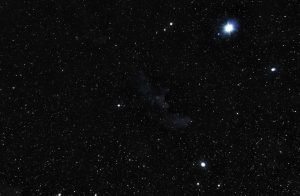
Astrophotography is an art form that combines the beauty of the night sky with the technical precision of photography. It’s a skill that requires patience, knowledge, and the right equipment. This guide is designed for beginners who are interested in astrophotography with telescopes. It will provide you with the basic knowledge and techniques that will help you master astrophotography.
Understanding Astrophotography
Astrophotography is the art of capturing images of celestial bodies, such as stars, planets, and galaxies. The night sky is filled with countless objects that can be photographed, each with its own unique beauty. To get started with astrophotography, you need to have a basic understanding of astronomy and photography.
Astrophotography is different from other types of photography because it involves capturing light from objects that are millions or even billions of miles away. This requires a long exposure time, which can range from several seconds to several hours. In addition, the earth’s rotation causes the stars to appear to move across the sky, so a tracking mount is usually needed to keep the telescope aligned with the target object.
Choosing the Right Equipment
The equipment you choose for astrophotography will depend on what you want to photograph. For wide-field astrophotography, which involves capturing large areas of the sky, a DSLR camera and a wide-angle lens are usually sufficient. However, if you want to photograph specific objects like planets or galaxies, you’ll need a telescope.
Choosing a telescope for astrophotography can be a daunting task, as there are many different types and models available. The most important factor to consider is the telescope’s aperture, which is the diameter of its main lens or mirror. A larger aperture allows more light to be collected, resulting in clearer images. Other factors to consider include the telescope’s focal length, mount type, and tracking capabilities.
Setting Up and Aligning Your Telescope
Setting up and aligning your telescope is a crucial step in astrophotography. The first thing you need to do is to assemble your telescope according to the manufacturer’s instructions. Make sure it’s stable and level before you start.
Next, you need to align your telescope with the North Star (Polaris) if you’re in the Northern Hemisphere, or the Southern Cross if you’re in the Southern Hemisphere. This process, known as polar alignment, is necessary for accurate tracking of celestial objects. Once your telescope is aligned, you can use its finder scope to locate your target object.
Taking Your First Astrophotography Shots
Once your telescope is set up and aligned, you’re ready to start taking photos. The first thing you need to do is to focus your telescope. This is usually done by looking at a bright star and adjusting the focus until the star appears as a small, sharp point.
Next, you need to set your camera’s settings. The exact settings will depend on your camera and the object you’re photographing, but in general, you’ll want to use a high ISO setting and a long exposure time. Start by taking a test shot and check the result. If the image is too dark, increase the exposure time or ISO setting. If it’s too bright, decrease them.
Processing Your Astrophotography Images
Once you’ve taken your photos, the next step is to process them. This involves adjusting the brightness, contrast, and color balance to bring out the details in the image. There are many software programs available for this, ranging from free options like GIMP to professional-grade software like Adobe Photoshop.
In addition to basic adjustments, you may also want to stack your images. Stacking is a technique where multiple images of the same object are combined to produce a single, high-quality image. This can help to reduce noise and bring out more detail in the image.
Conclusion
Astrophotography with telescopes is a rewarding hobby that can provide you with stunning images of the night sky. While it can be challenging at first, with patience and practice, you can master the techniques needed to capture beautiful celestial images. Remember, the journey is just as important as the destination, so enjoy the process of learning and exploring the night sky. Happy stargazing!