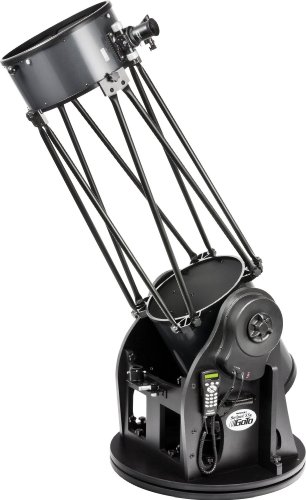
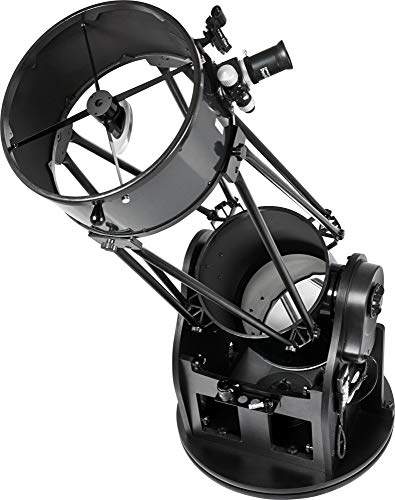
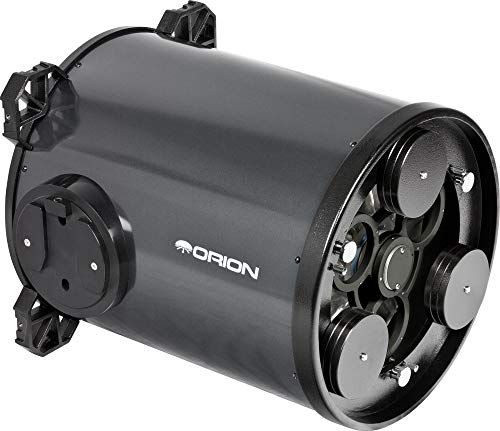
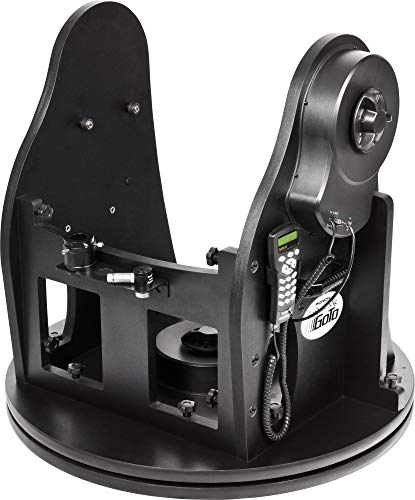
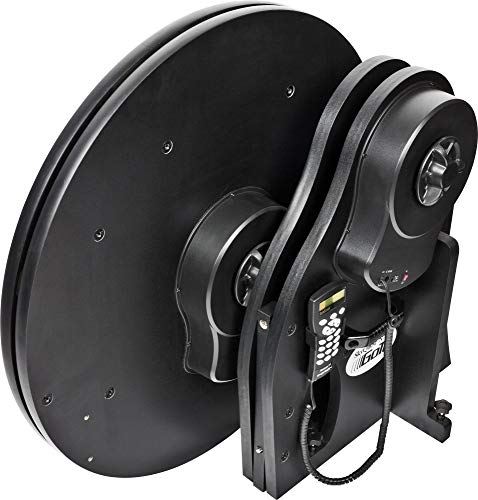

Description
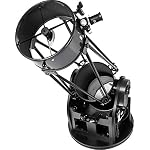
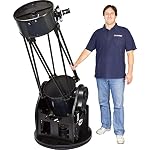
Will the XX16g work at your observing site?
The 406 mm parabolic mirror gathers light for visual observing of galaxies and star clusters. The 1,800 mm focal length gives about 64× with a 28 mm eyepiece and 144× with a 12.5 mm eyepiece. Those were the two sizes in Orion’s manual; check what the seller actually includes. You can try your own eyepieces in the Optodir telescope calculator.
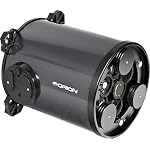
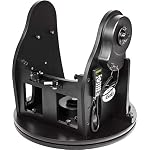
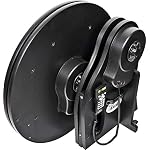
- What goes in the car? The upper tube, lower mirror section and truss poles separate, and the base comes apart into panels and a motorized groundplate. Orion lists the assembled tube at 69 lb and the complete base at 105 lb. The heaviest separate piece is the groundplate at about 61 lb. Measure the narrowest doorway and cargo opening, including clearance to turn the piece.
- Can you reach the eyepiece? One XX16g owner measured about 72 inches from the ground with the tube pointed straight up. Compare that with your eye height in observing shoes. Eyepiece choice and a raised observing platform can change the working height.
- What powers GoTo? The drive requires 12 V DC at 2.1 A, tip positive. After reassembly, check collimation before aligning the GoTo system. The Orion XXg instruction manual covers transport on page 15 and the XX16g specifications on page 23.
Check the exact offer
For a used or open-box example, ask for the model number, photos of both mirrors, and confirmation that the base drives work. Check for all truss poles, counterweights, controller or compatible Wi-Fi hardware, and power cables. A listing for a tube, accessory or different SkyQuest model is not the complete XX16g. If the 61 lb lift rules it out, compare other reflector and Dobsonian telescopes before choosing a replacement.


